Basque horses

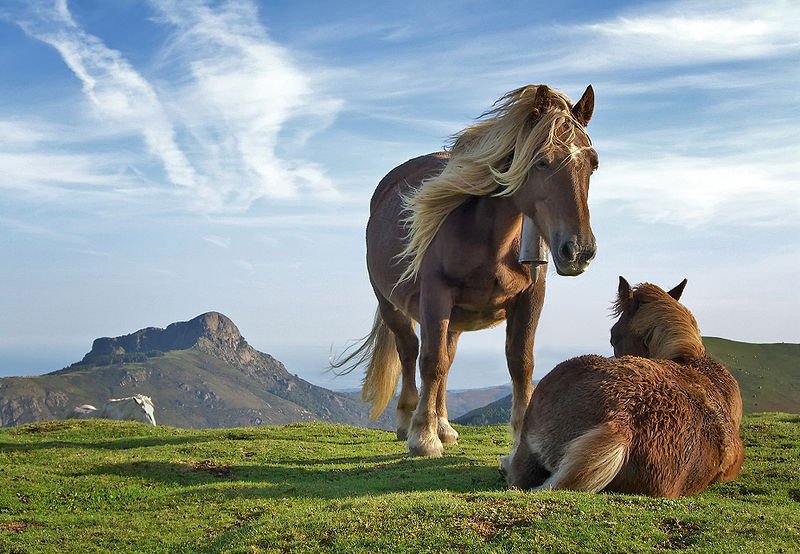
On the left these beautiful pottok horses on Bianditz mountain, in Navarra. Behind lie the Aiako mountains. The Pottok (Wikipedia) is an endangered, semi-feral breed of pony native to the Basque Pyrenees. This image by Mikel Ortega won an award on Wikipedia.

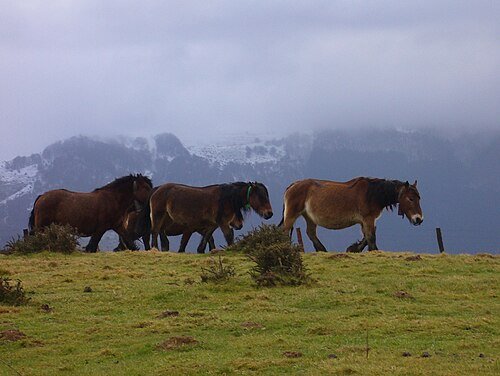
On the right, another native Basque breed is the Basque mountain horse. This photo in the Parque Natural de Pagoeta is taken by Gorritxiki1 (wikipedia).

The standard Basque name for horse is zaldi, which I like. In plural, it’s zaldiak.

This is a great book:The Basque Country: A Cultural History by Paddy Woodworth: Full of analysis and fascinating facts. Overall, an excellent balanced account.

Zumaia flysch cliffs

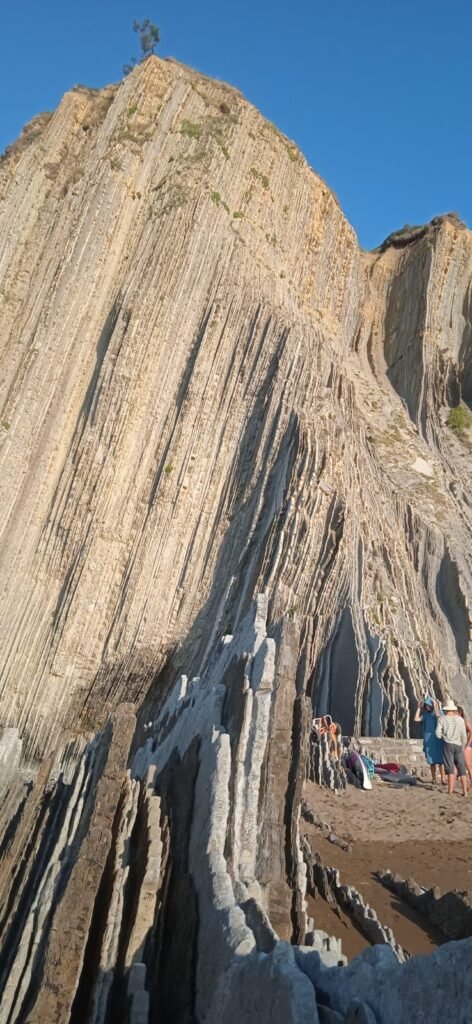
Flysch cliffs, Zumaia, one of the most amazing geological formations I’ve seen. These vertical layers run for 8 kilometres along Basque coast, each a page, forming a book covering 60 million years of our planet’s history. Created when Iberia crashed into Europe and things went all squishy.

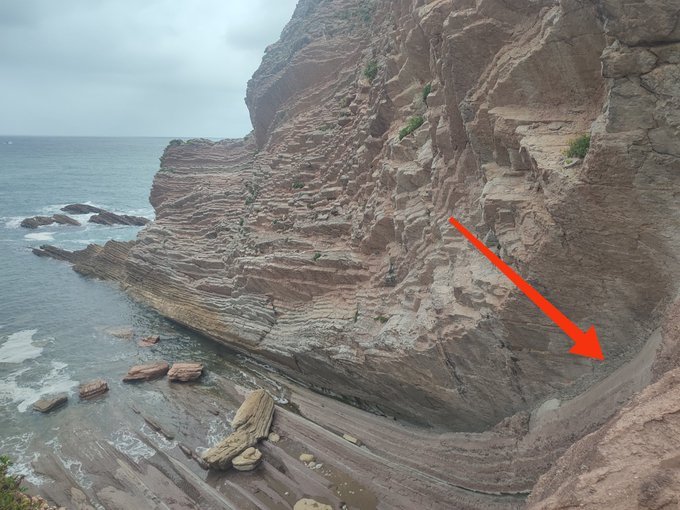
The second image just a few hundred metres away shows something remarkable, a key site in Earth history. One of the few places where the K/T boundary is identifiable (with a microscope). Below lie dinosaurs, etc, above the flowering of mammals, leading to us. In between a thin iridium deposit, common in meteorites, including the big one 65 million years ago, landing in the Gulf of Mexico, dispersing a thin layer of this rare metal across the planet..

Video of Sakoneta, Flysch de Zumaia, spectacular sea cliffs, rock beach, brooding sky, scuttling crabs. (I also learnt here crab in Basque is karramarro).