Some years ago in January, I watched this beautiful animal in the Sierra de Andújar, Andalucia with the mobile stuck on a friend’s telescope. She was sitting, watching us, unimpressed, about 250 metres away. The next day another Iberian lynx, a male, crossed 100 metres from where we stood before vanishing into the scrub. Enchanted moments in the Sierra Morena.
Impressive ice well in Fuendetodos, birthplace of Goya. One of ~1000 in Aragón, Catalonia, Valencia, Murcia Built during the Little Ice Age (C16-19th) they were big business in Eastern Spain. Ice wae collected over winter in sierras, stored and shipped to the cities until the early C20th when technology rendered them obsolete.
The River Ebro frozen at Tortosa, Catalonia, near its mouth. 1891, at the end of the so-called Little Ice Age. You’d have thought not much chance of this happening again for the foreseeable future, although climate sciencists say with heating world in chaos such cold snaps are also very possible.
Esbardu. A lovely Asturian word meaning bear cub. Some 370 brown bears now live in the Cantabrian mountains, on a steady path to recovery after a a nadir at the turn of the century. Photo. @fundacion_oso_pardo
The Cantabrian bear population is distributed across the autonomous communities of Asturias, Cantabria, the Castillan regions of León and Palencia, as well as in recent years a small part of Lugo I. Galicia. Historically, the population declined until the late 20th century, but a recovery period began in the mid-1990s and continues to this day.
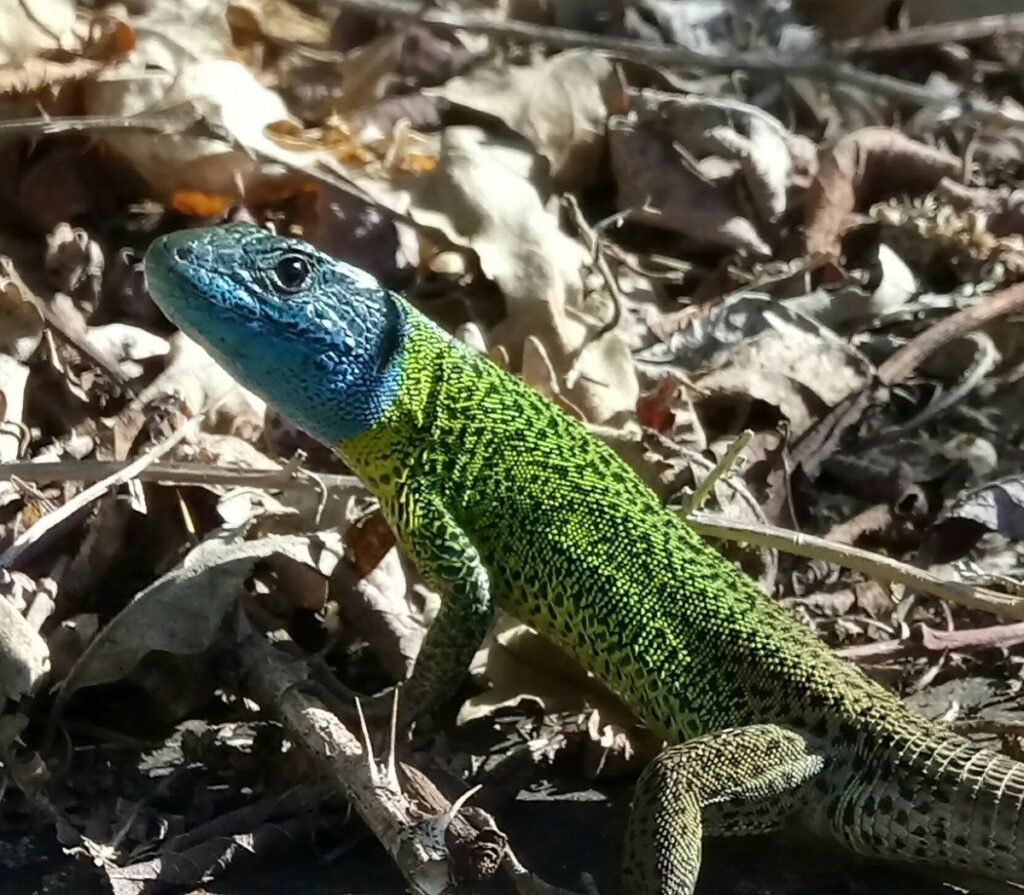
Cattle egret taking its time to swallow a yummy Iberian green frog in front of the spider monkey enclosure in Barcelona zoo. Several hundred grey herons, and cattle and common egrets live wild in the trees of the zoo. Whole thing took about 10 minutes.
Meet our new neighbour Eva. She lives in our stairwell and is a blue-eyed ensign wasp (Evania appendigaster). She parasites the oothecas (egg capules) of cockroaches – a huge problem in Barcelona in the heat, humidity and so many restaurants. We love Eva.
Official stamp of the Basque border town of Hondarribia, dated 1335, showing the hunting of a Right Whale (Ballena de los vascos in Spanish). With local whales decimated by the end of the Middle Ages, Basque whalers found new population off Newfoundland, reaching these territories by the early C16th or even before.
First page of 18th century Basque-Icelandic dictionary. A Basque-Icelandic pidgin was spoken between locals and Basque whalers from ~1600 including the well-known expression “Fenicha for ju” meaning F**k you! https://en.wikipedia.org/wiki/Basque%E2%80%93Icelandic_pidgin
Katagorri, a lovely word in Basque for squirrel. (Also Urtxintx) Ardilla in Spanish, Esquirol in Catalan. Esquío in Galicia 📷Fischer.H (Wikipedia)
Many years ago, an old anarchist bookseller from the Raval assured me that squirrel was the most delicate meat he had ever eaten. Nowadays, it is better to let them play in the trees.
There’s a song from the 1960s:
Nik ere nahi nuke Izan urtxintxak bezala Hain gora, hain trebe, Izaiteko libre
I, too, would like To be like the squirrels— So high up, so agile— To be free.
Aitor, a friend on social media, a Basque doctor commented:
It’s a song from my childhood, when our language was banned, Franco ruled with an iron fist and freedom was to be achieved yet. We wanted to be like squirrels. A song for children with a deep meaning
Lunes al Sol starring Javier Barden. This powerful 2002 drama shows how unemployment affects men left jobless by the closure of Vigo’s shipyards in Galicia. Bardem’s later film El Buen Patrón is told from the opposite perspective of a boss, who only concern is himself.. It’s even more damning on effects of capitalism on human beings.