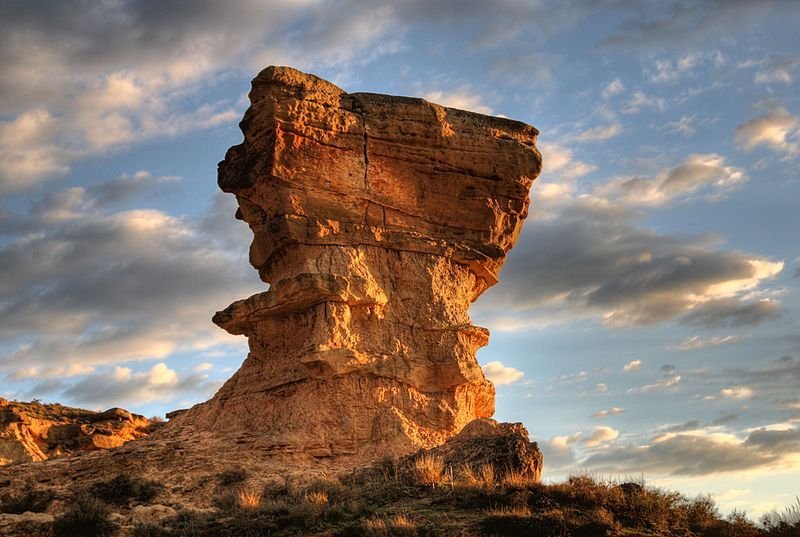
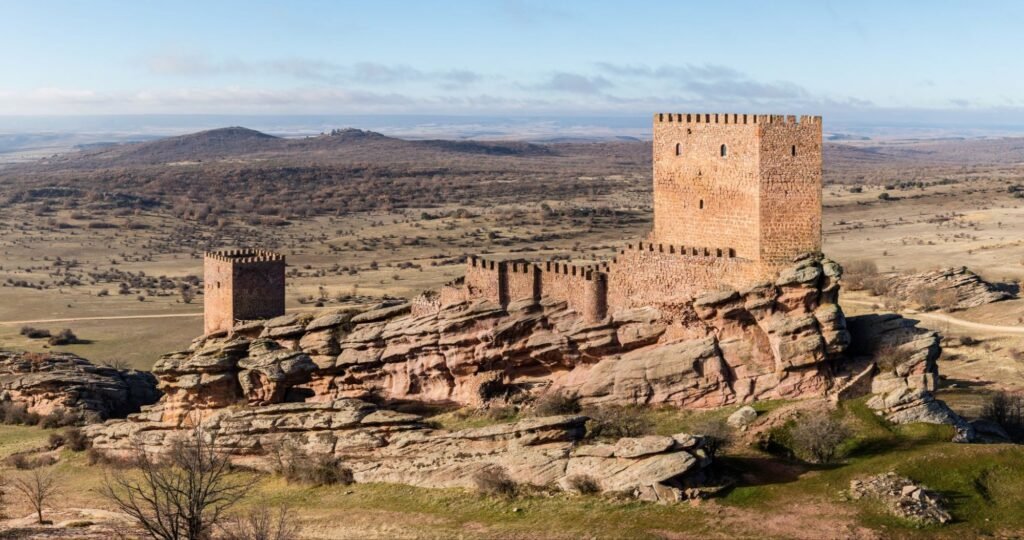
Spanish castle magic. Castillo de Zafra, Guadalajara, Dating from the late 12th century it is built on a sandstone outcrop on top of a previous Moorish fort, and stands on the borderlands between Christian and Muslim-ruled territory. Castillian, the language from the Land of Castles.
Incidentally, the castle featured as the Tower of Joy in Games of Thrones. 📷 Diego Delso, Wikipedia
There are an estimated 10,400 fortified structures in Spain. Most are in private hands. Around 90% of a runious state.
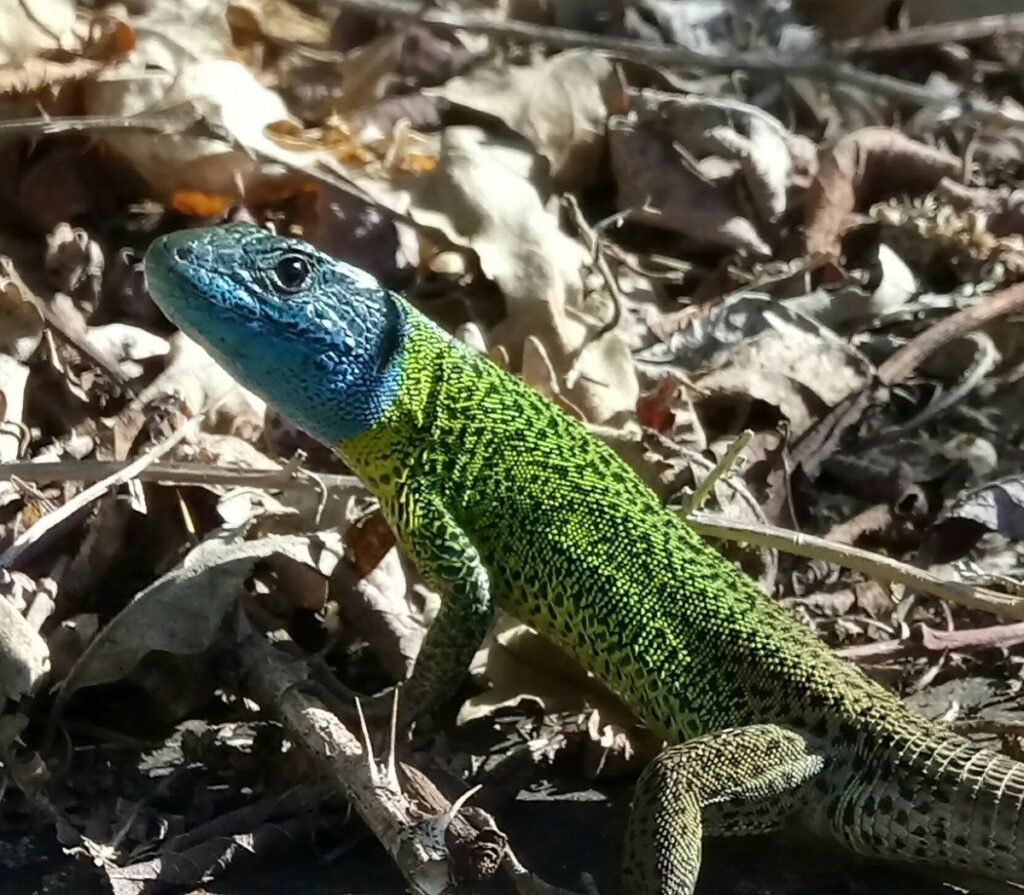
A splendid looking male Iberian emerald lizard (Lacerta schreiberi) in the Sierra de la Culebra, Zamora. These largish lizards (~40 maximum in length) are endemic to the northwest of the Iberian Peninsula. After taking this, standing on one leg, arm outstretched, I fell into a bush of thorns.
In Spanish they are called Lagarto verdinegro.
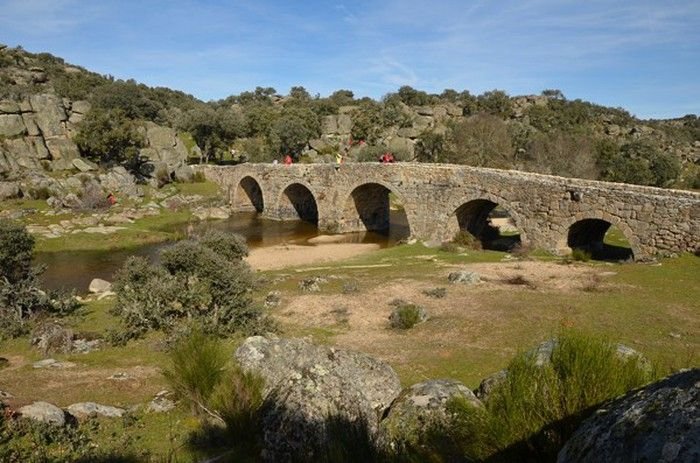
Puente Mocho. I would love to walking over this medieval bridge now, following the Roman road through dehesa woodland, past Iberian pigs, black storks and imperial eagles overhead. Near Ledesma (Salamanca). Photo Wiki
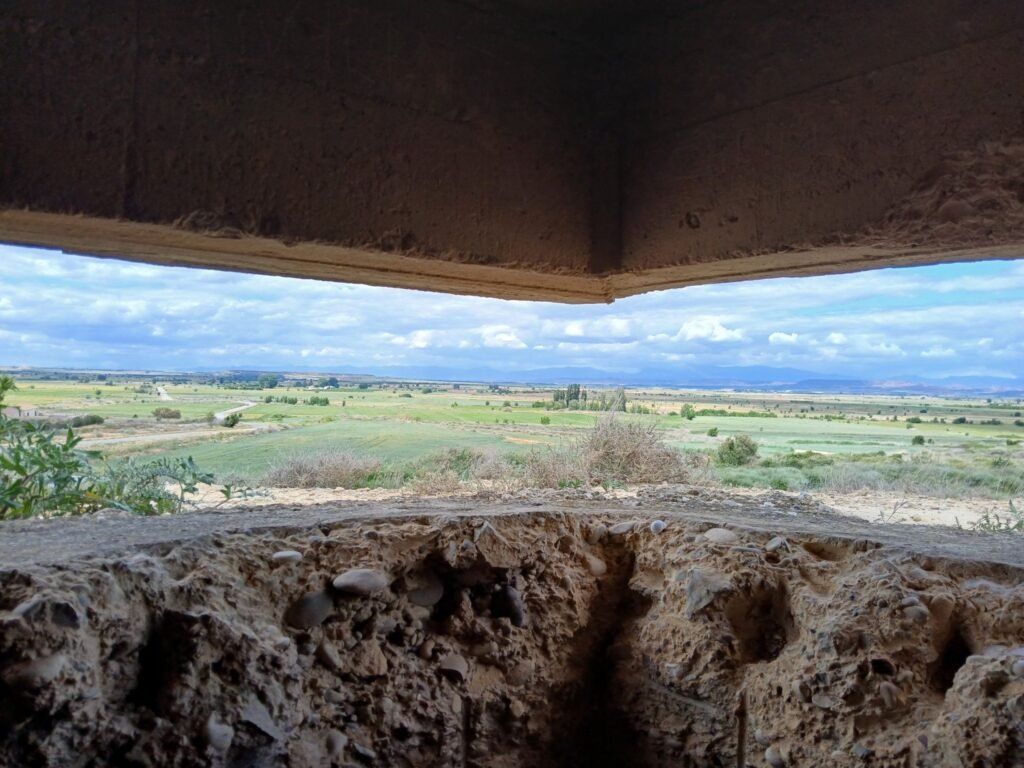
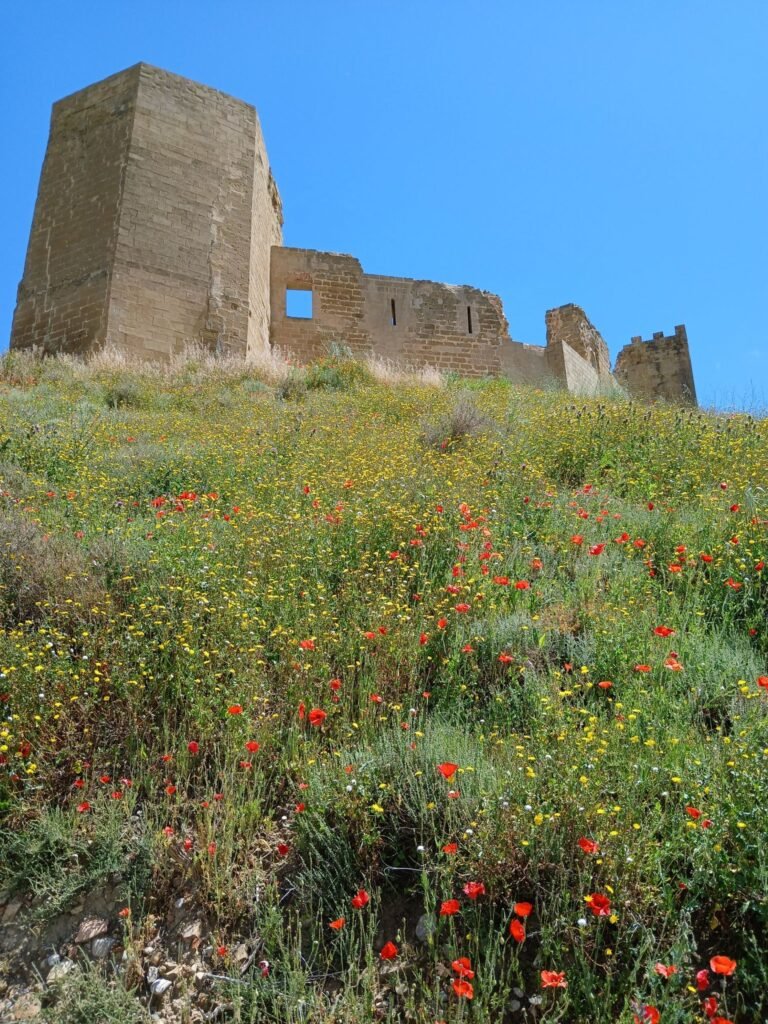
On the way up to Montearagón castle, taken by the POUM mlitia in September 1936.
Ridiculously beautiful wildflowers like a Monet, a griffon vulture sonewhere above. Always a vulture somewhere over your head in Aragón. With the Orwell Society one May.
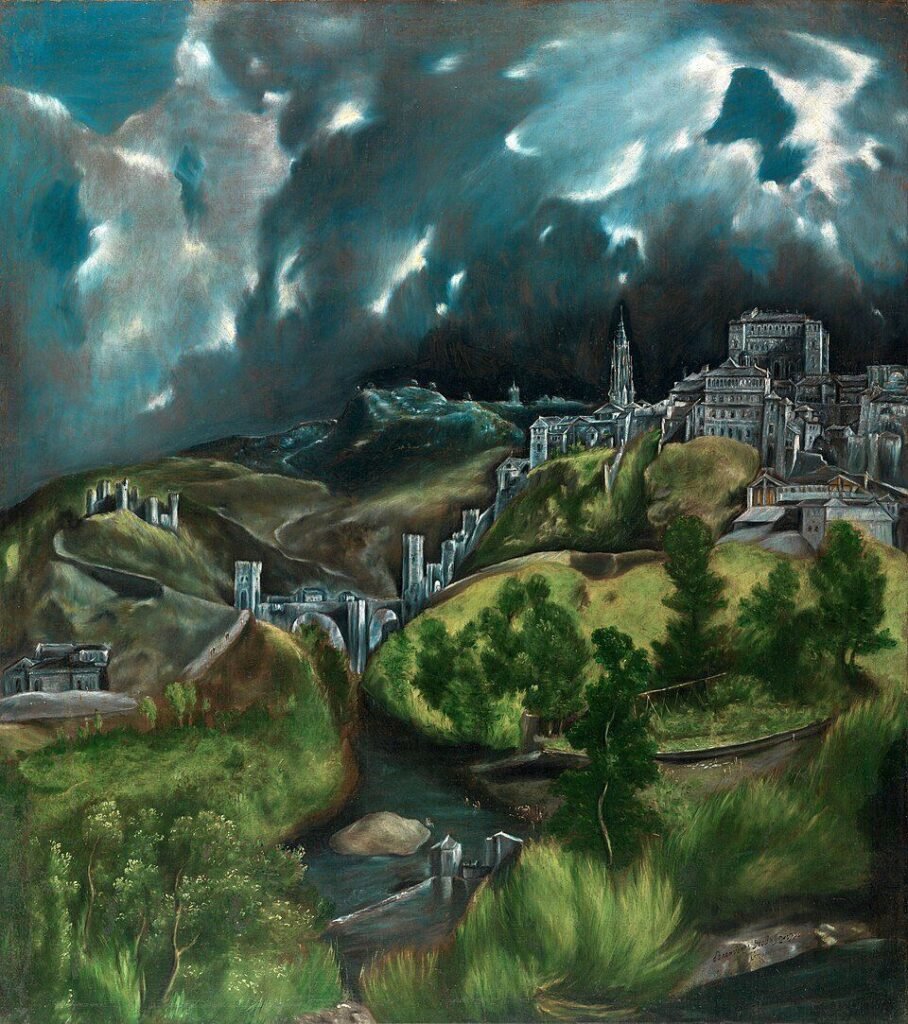
El Greco”s mesmerising and dramatic View of Toledo. Painted around ~1600. I love the threatening clouds, the hills seem about to swallow the town or perhaps slide into the Tajo below. This is one of the earliest examples of a landscape painting though it is not a true topographical representation.
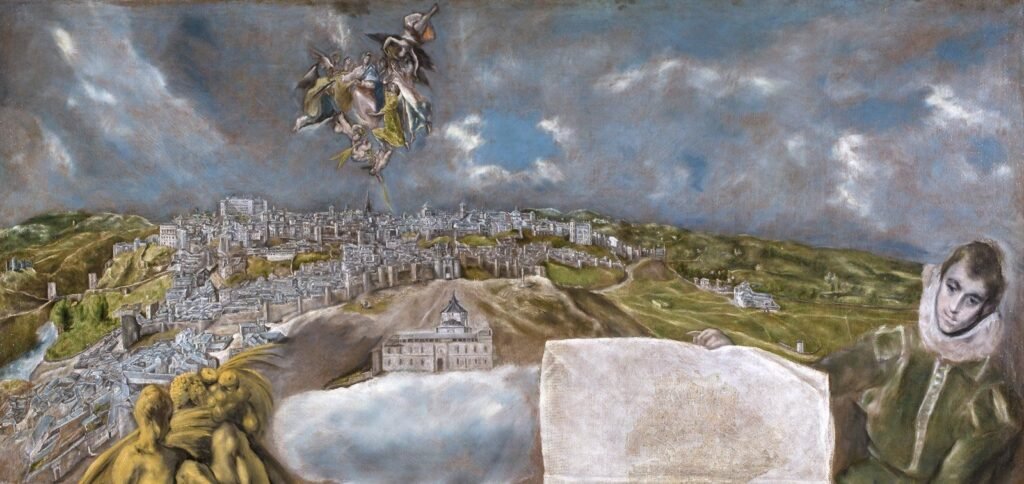
El Greco’s later painted View and Plan of Toledo (1608). This canvas offers a multiple viewpoint; a panoramic. The River Tajo is seen here asa sculpture pouring water and so prosperity, apparently part of the town’s propaganda campaign to convince Philip II and his court to return to Toledo from Madrid.
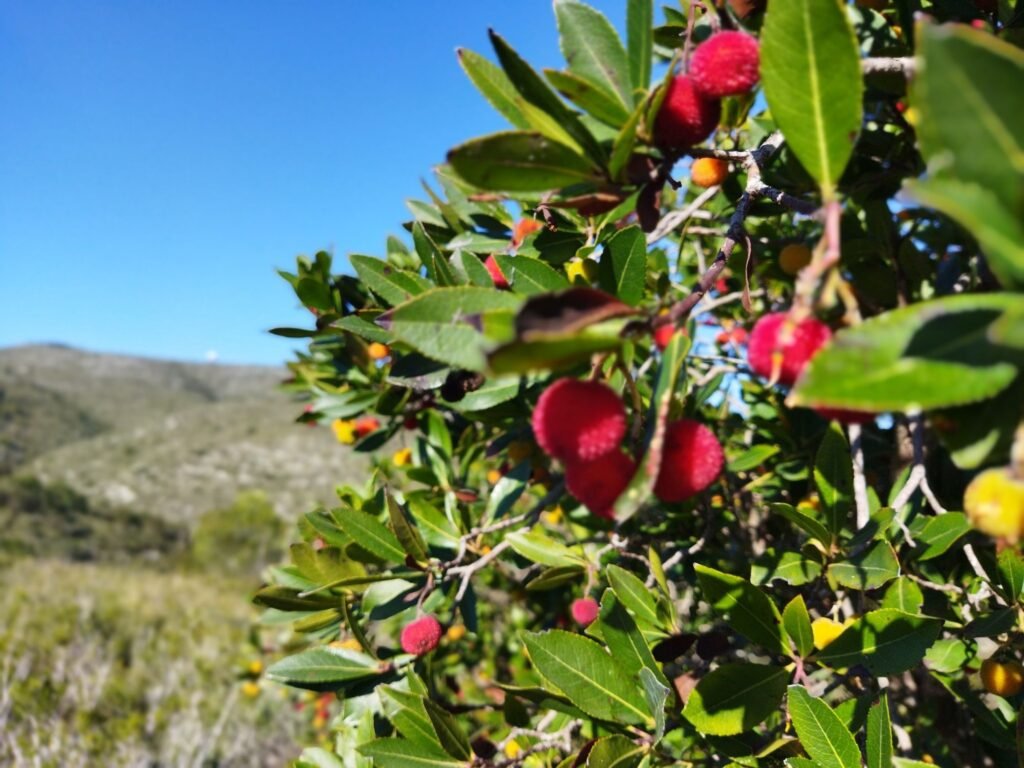
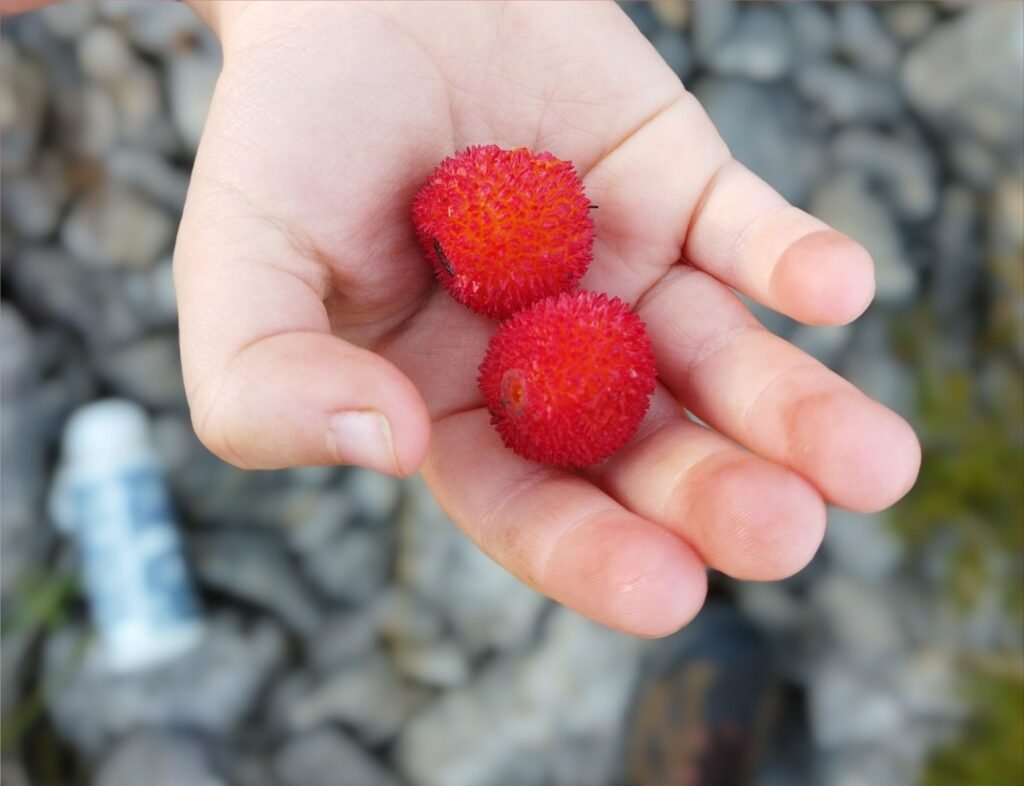
Lovely walk in the wild limestone massif of the Serra del Garraf just southwest of Barcelona. The strawberry trees (madroño in Spanish, arbocer/arboç in Catalan) were laden with fruit. They have a reputation of being a bit dull – their scientific name Arbutus unedo is Latin for “I only eat one”) but these were sweet and tasty enough so I had about 30.
Popular knowledge has it that if you eat too many madroños you get drunk. The Portuguese have a prized madroño liquor (medronho) but I haven’t tried it yet.
A bear feeding on a strawberry tree is also the symbol of the city of Madrid.
They’re also known as arbustus trees in English.
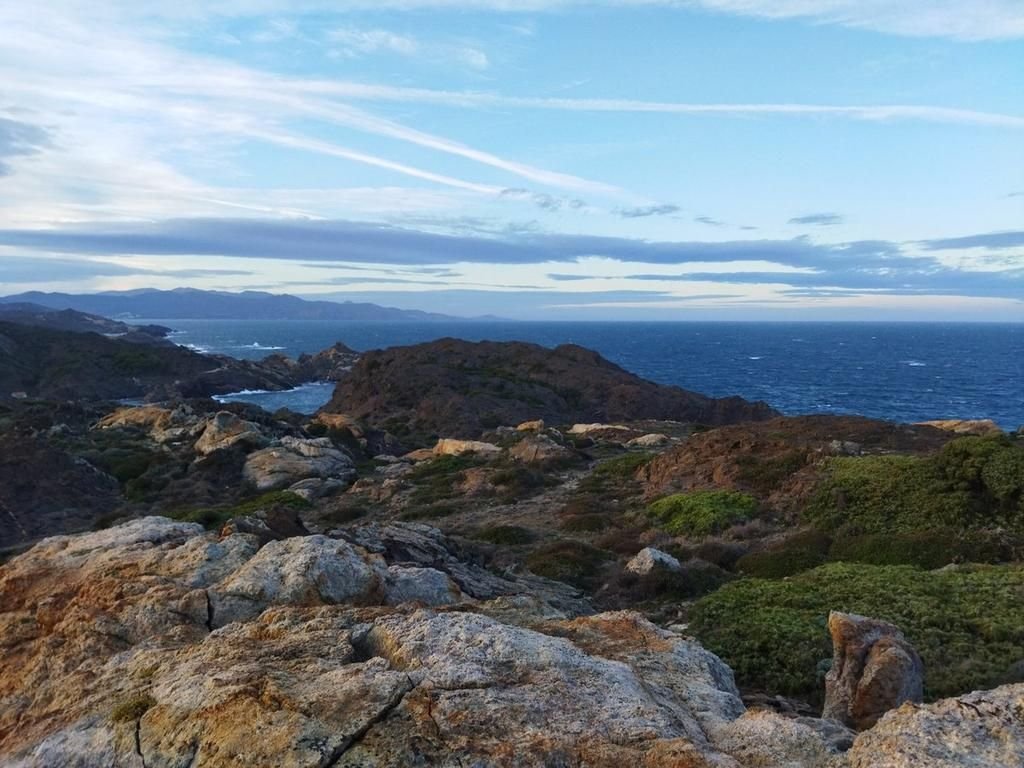
Cap de Creus, where the Pyrenees ends, falling into the sea in a riot of schist and fantastical erosion. Last year’s sky swept clean by the Tramuntana wind, crystal clear light. Salvador’s childhood landscape, Dalí’s dreamscape.
They write from Galicia in Spain that some fishermen lately took on that coast a sort of monster, or merman, five feet and half long from it’s foot to its head, which was like that of a goat. It has a long beard and moustaches, and black skin somewhat hairy, a very long neck, short arms, and hand longer than they ought to be in proportion to the rest of the body: long fingers like those of a man, with nails like claws, very long toes, joined like the feet of a duck, and the heels furnished with fins resembling the winged feet with which painters represent Mercury.
From Scots Magazine 1739.
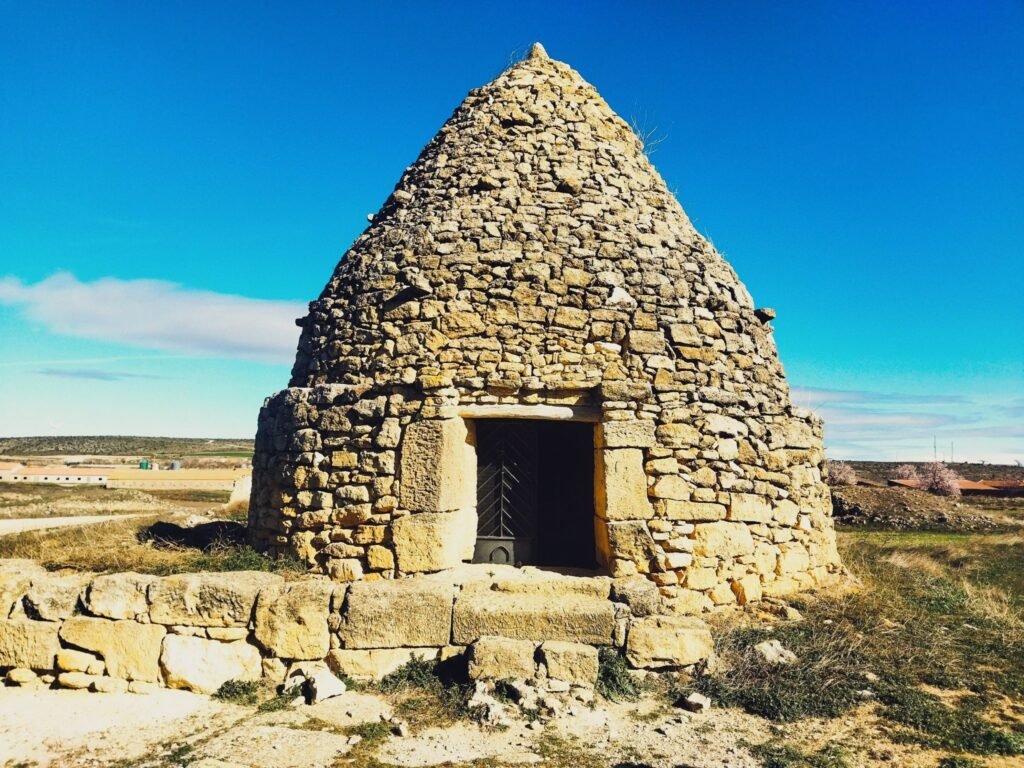
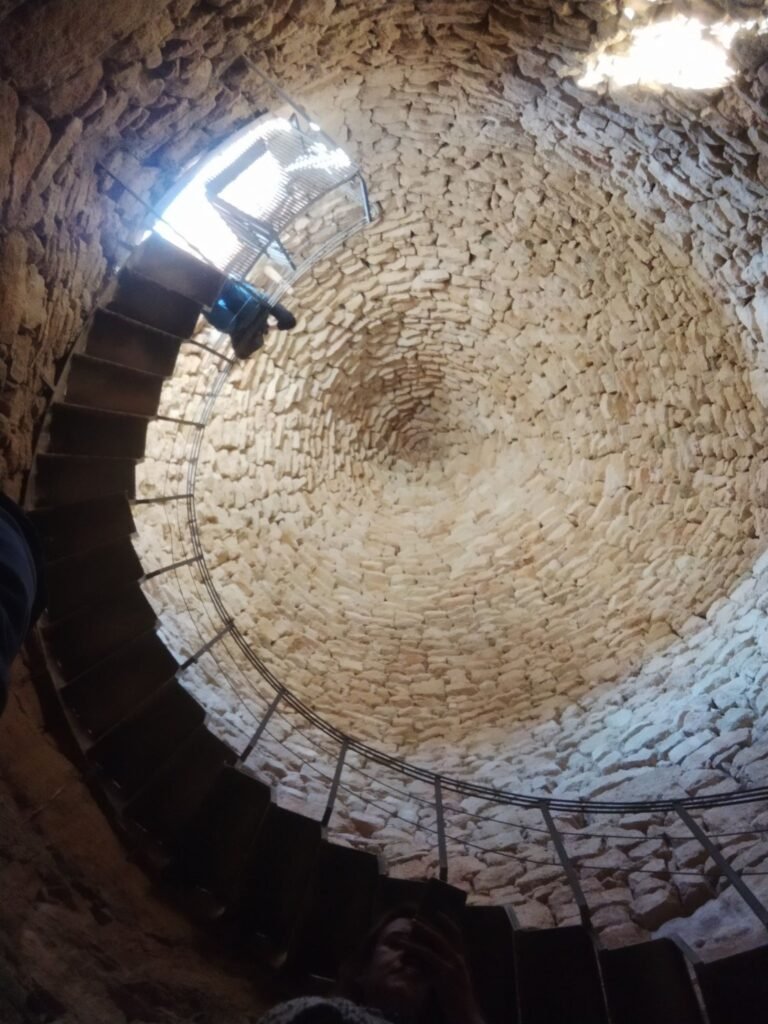
Impressive ice well in Fuendetodos, birthplace of Goya. One of ~1000 in Aragón, Catalonia, Valencia, Murcia Built during the Little Ice Age (C16-19th) they were big business in Eastern Spain. Ice wae collected over winter in sierras, stored and shipped to the cities until the early C20th when technology rendered them obsolete.
It goes without saying that climate change has rendered them ultra-obsolete. So little snow falls in these places in the heating 21st century.