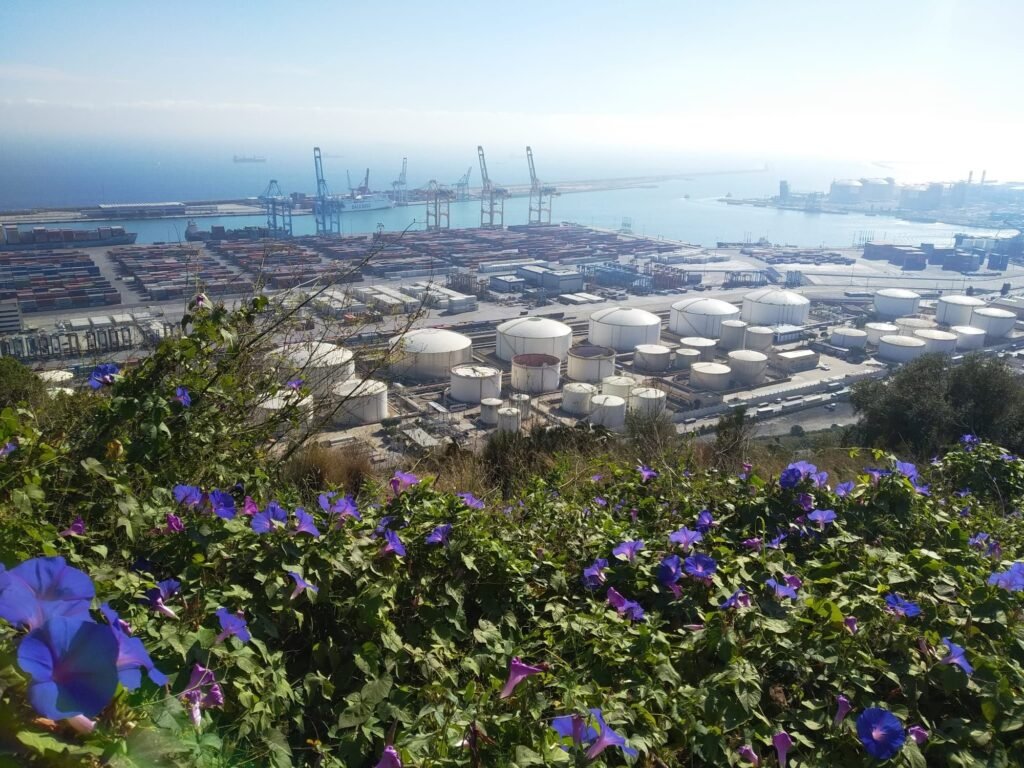
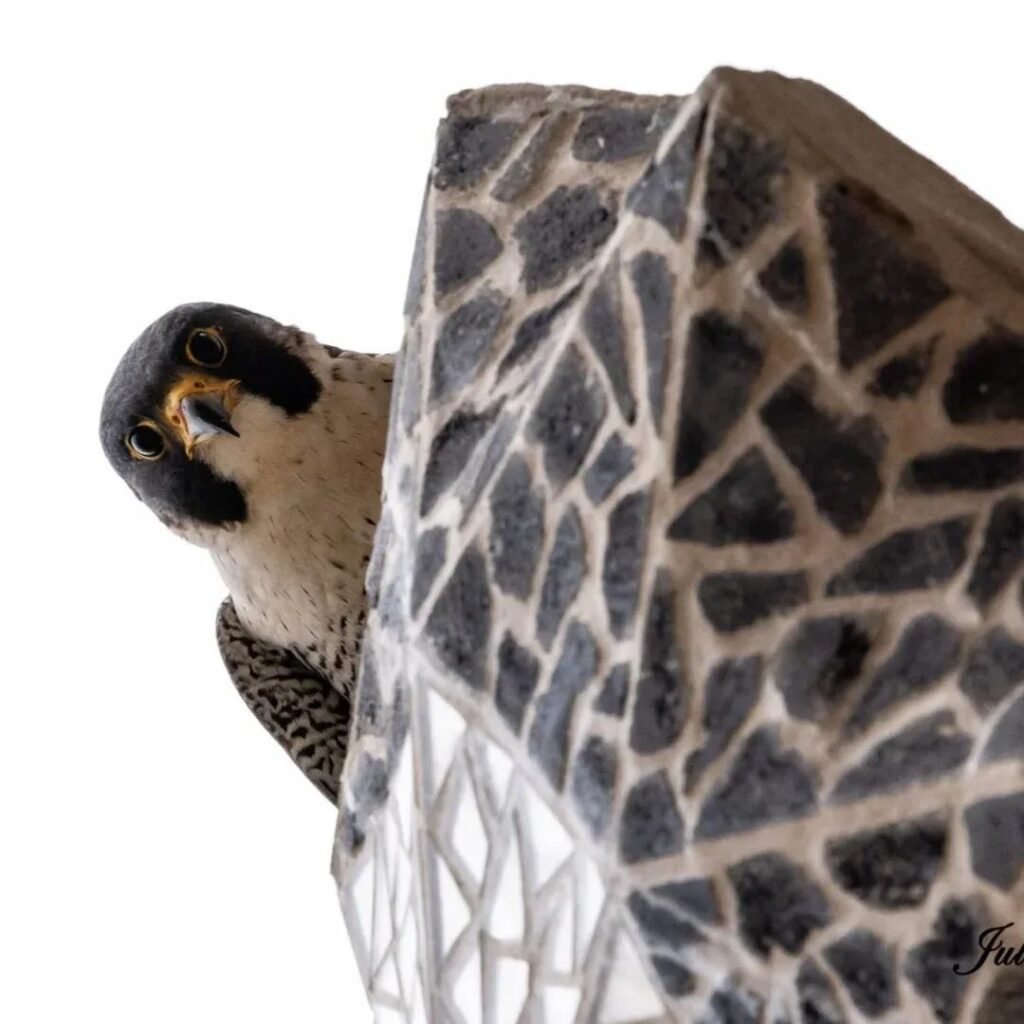
Barcelona’s industrial port hazy from Montjuïc, its slopes invaded by these purple flowers – morning glory from Central America. Their seeds are, I’m told, a hallucinagenic similar to LSD. I failed to see the pair of peregrine falcons that hunt from the cliffs below
Lights twinkling in Barcelona harbour in a darkening sky from Montjuïc Castle. The cannons behind, designed for war, re-signified clambering with children. The Mercè festival was about to kick off.
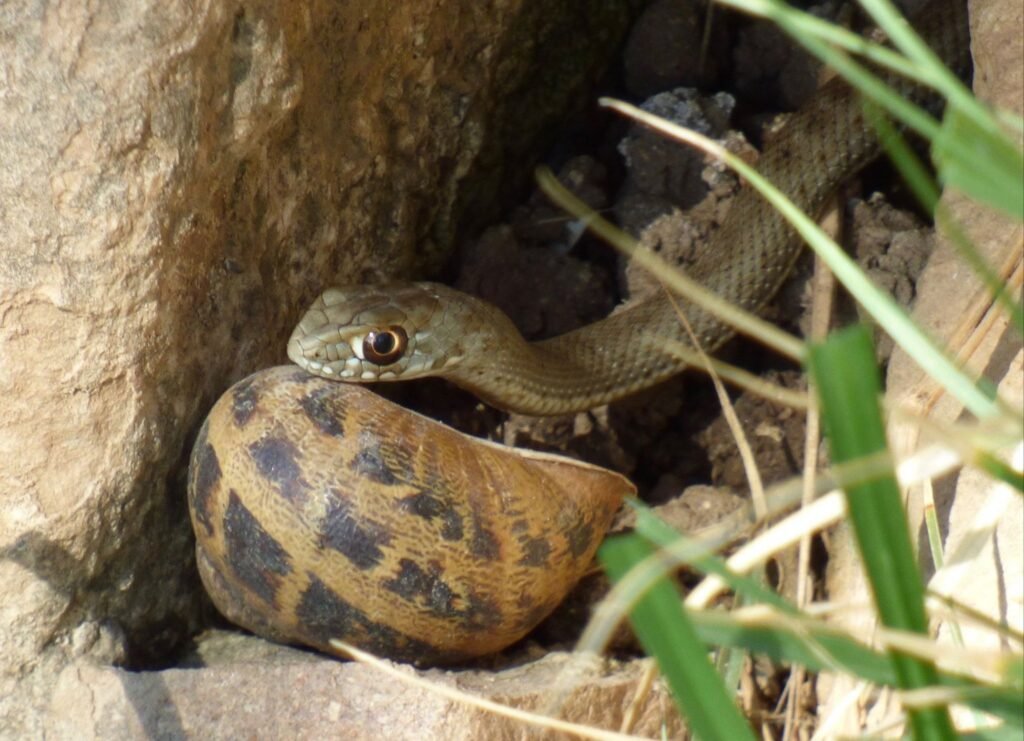
A young Montpellier snake on Montjuïc emerging from the castle walls by Lucy Brzoska. I’ve yet to spot one here, but it’s always nice to know Europe’s largest snake, feisty too, might be watching us as we walk by, still living in the heart of Barcelona.
The Montpeller is also probably the commonest snake in the Mediterranean region and in Spain. This is despite the numerous deaths on the roads to which it is attracted in search of heat, and its direct persecution by humans – it is seen as a threat to small game species and farm birds because of its fearsome size. The Montpellier aeasily adapts to humanised environs, which push out its competitor snake species. It is in theory one of the five venomous snakes in Spain, though unlike the vipers the back position of its venom fangs means poison injection is unusual, and the latter reputedly weak. This is also the case of the false smooth snake.
Culebra bastarda in Spanish, Serp verda in Catalan.
This was pretty amazing. An albino (or more likely leucistic) bat in Montjuïc, Barcelona. Quite spooky and looked much bigger than in the video. Apparently very, very rare in bats as far I can understand talking to people. A few years ago with my partner Mònica Navarro.
Cattle egret taking its time to swallow a yummy Iberian green frog in front of the spider monkey enclosure in Barcelona zoo. Several hundred grey herons, and cattle and common egrets live wild in the trees of the zoo. Whole thing took about 10 minutes.
Meet our new neighbour Eva. She lives in our stairwell and is a blue-eyed ensign wasp (Evania appendigaster). She parasites the oothecas (egg capules) of cockroaches – a huge problem in Barcelona in the heat, humidity and so many restaurants. We love Eva.
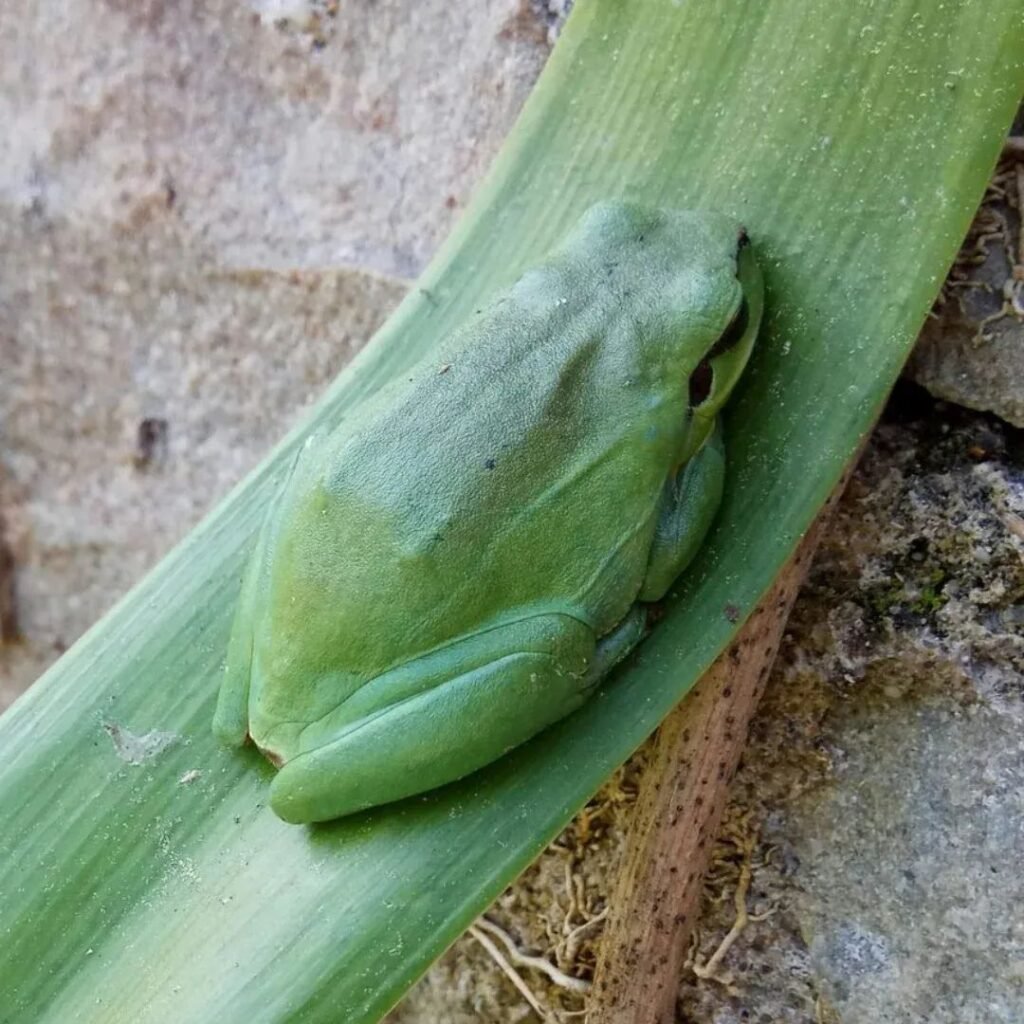
This lovely tree frog (Ranita meridional in Spanish) I spotted on Montjuïc, Barcelona. Orwell perhaps saw them on the Aragon front in 1937:
“Round the drinking-pool that served for the village mules I found exquisite green frogs the size of a penny, so brilliant that the young grass looked dull beside them”
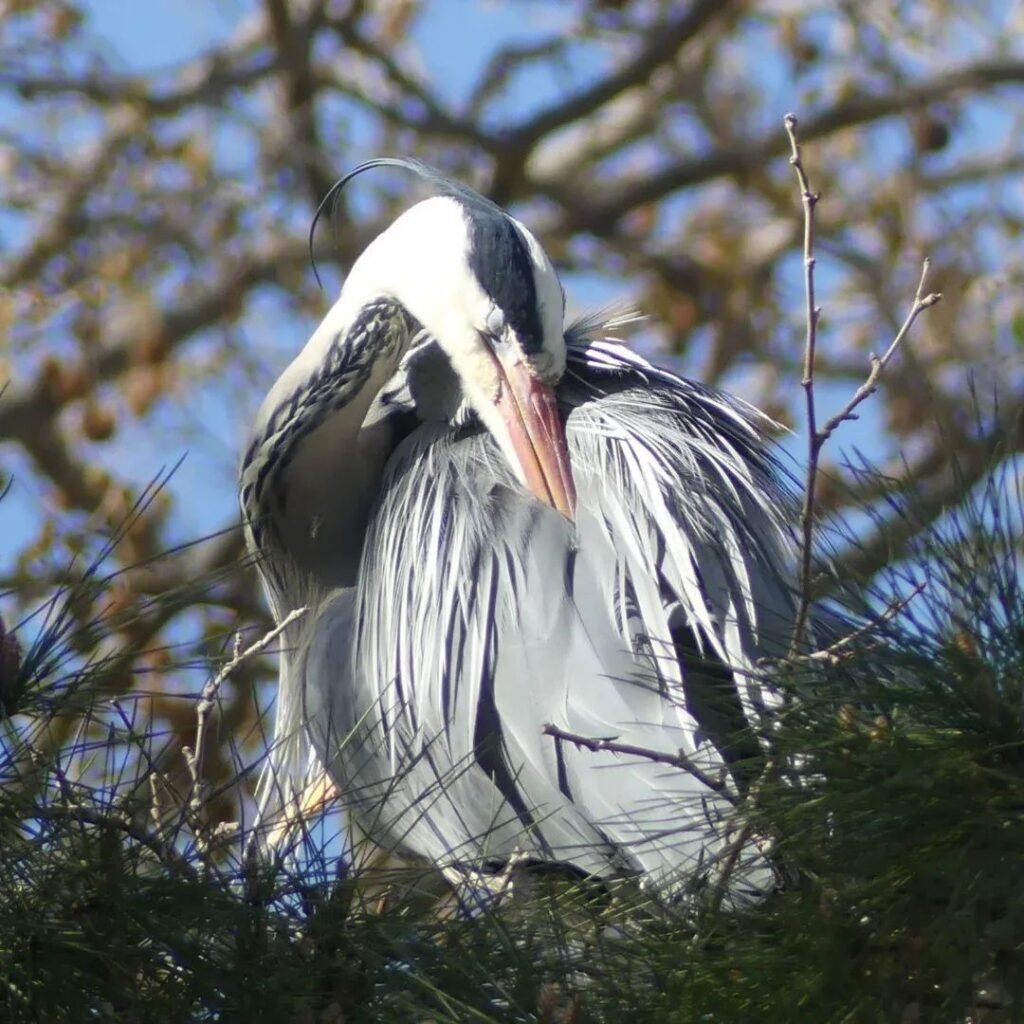
We watched this grey heron (Spanish “garza real”; Catalan “bernat pescaire”) having a good old preen in the trees above Barcelona zoo. More than 100 wild pairs breed in the zoo every year, the largest urban heronry in Europe. They share their tree roosts with dozens of egrets.
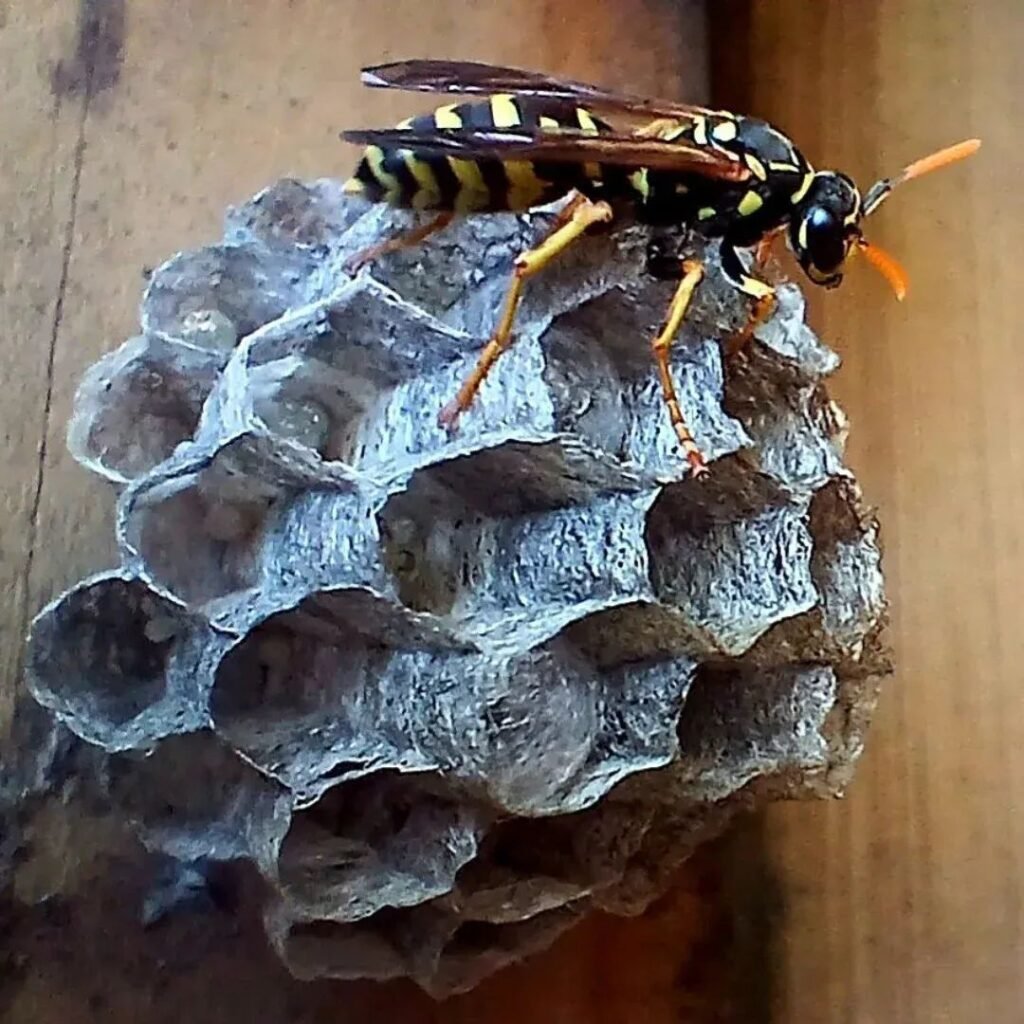
Paper wasp on its communal nest. Antic Jardí Botànic, Montjuïc. “While not aggressive, they will defend their nests if disturbed” … I can vouch for that…