Congo nature
Articles in ‘Congo nature’
September 30th, 2009

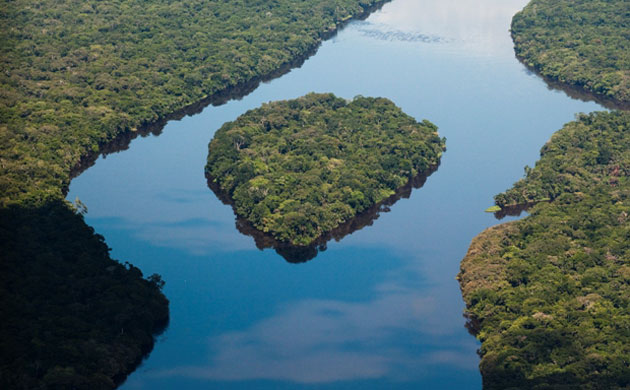
Not all bad news from Congo. The WWF reports here on the successs of the Congo Basin Forest Partnership in saving the world’s second biggest rainforest. Some of its accomplishments:
- 34 protected areas, 61 community based natural resource management areas, and 34 extractive resource zones have been zoned for conservation management, covering 126 million acres (51 million hectares) or more than a third of the Congo Basin forests.
- More than 11.5 million acres of forest have been certified as sustainably harvested by the Forest Stewardship Council (FSC).
- Over 5,000 local men and women have been trained in conservation, land use planning and related conservation capacities.
- Although logging and forest degradation remain serious problems, the overall rate of deforestation in the Congo Basin is estimated to be a relatively low 0.17% — a third of that of Brazil and a 10th of that of Indonesia.
- Indicators for the survival of some endangered species are also improving. Despite years of conflict and poaching, the population of mountain gorillas in Virunga, between the Democratic Republic of Congo, Rwanda and Uganda, is up 17% over a previous census taken 20 years ago.
- Studies of landscapes and wildlife have improved conservation planning, exemplified by the discovery of 125,000 previously unknown western lowland gorillas in Northern Congo.
More here
Africa nature, Congo nature | Tags: Congo Basin, Congo Basin Forest Partnership, Environmental issues in Congo, Good news from Congo|
September 29th, 2009

Very interesting series of images and notes by Spanish photographer Daniel Beltrá on deforestation and other environmental issues in the Democratic Republic of Congo (DRC). Greenpeace has estimated that the DRC risks losing more than 40% of its forests.
The Guardian
See also
Daniel Beltrá‘s site
Africa nature, Congo nature | Tags: Environmental issues in Congo|
September 17th, 2009
Excellent article on “Saving Africa’s ‘unicorn’, the okapi” . Conservationists are working with local communities to protect the okapi, and its rainforest habitat, in the aftermath of a brutal civil war. Now, as a semblance of peace has settled over Democratic Republic of Congo (DRC), the okapi’s prospects have further dimmed, for its home is increasingly seen as a rich source of timber, minerals, and bush meat to help the war-torn country rebuild. Here
The oldest known silverback in the wild has died in Rwanda at the age of 35
Kruger Park is losing white rhinos to poachers. South Africa has lost 33 rhinos to poachers this year, 28 of them were illegally killed along the eastern boundary with Mozambique.
Saving gorillas by bringing healthcare to local people in Uganda, an interview with Dr. Gladys Kalema-Zikusoka. Here
Africa nature, Congo nature, Rwanda nature, South Africa nature | Tags: Africa's unicorn, Congo bushmeat, Kruger National Park, Okapi, Rhino poaching, Rhino Poaching in South Afica|
August 6th, 2009
Image from official Virunga site
For the last week a bloody battle has been raging in Virunga National Park in Democratic Republic of Congo to save the region’s gorillas. Congolese wildlife officers, backed by UN troops, have destroyed hundreds of illegal charcoal kilns in the forests of Virunga, in an attempt to disrupt the environmentally devastating industry. The $30m trade is used to fund armed groups who destabilise the region. A counterattack is now expected. Virunga, Africa’s oldest national park, lies across the mountain chain that straddles the border between DRC, Rwanda and Uganda. It is home to the most important remaining population of mountain gorillas in Congo. More from Independent
Since 1994, about 120 rangers have been killed in the line of duty protecting the park from illegal poaching and land acquisition
Although mountain gorillas are now extremely rare and listed as one of the most critically-endangered species, successful conservation work has helped to secure the remaining populations. Their populations actually increased during the years of political upheaval in the region (1994-2004), but renewed military conflict in the park (October 2008) including the seizing of the park headquarters and expelling of park rangers, poaching, and rampant deforestation for illegal charcoal production once again cast doubt on their future. Wikipedia
That charcoal is still such a lucrative industry is a demonstration of how the lack of development in Africa can also be a serious threat to wildlife. The charcoal industry led to widespread deforestation in Europe before the arrival of coal.
Donate to the Senkwekwe Appeal for Patrol Rations “Donating through gorilla.cd is the fastest and most effective way to support the effort to save Virunga National Park and its mountain gorillas. And don’t worry, all our administrative costs are paid for by a grant from the European Union. All donations are transparently reported in real time on the blog sidebar – have a look!”
See also
Africa nature, Congo nature | Tags: Gorillas in Democratic Republic of Congo, Gorillas in Virunga National Park, mountain gorillas, Virunga National Park|